
Explore and Understand a vision for a United States of Africa by Kwame Nkrumah.
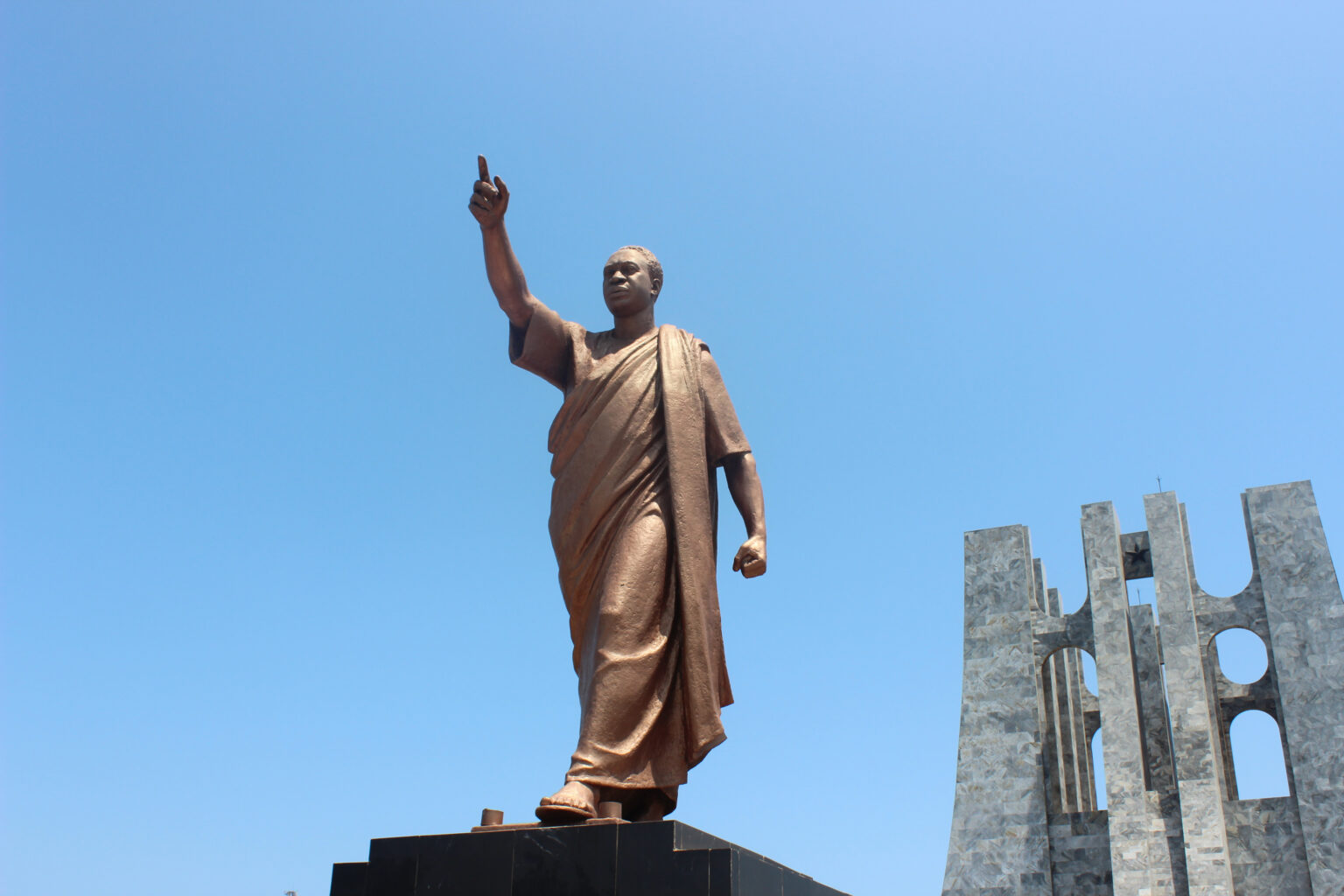
Kwame Nkrumah stood as an uncompromising, visionary leader. Crucially, he defined the future of Africa not as a collection of fragmented states, but as a single, powerful political entity. He passionately advocated for a United States of Africa. This guide explores the profound philosophy, specific mechanisms, and enduring legacy of his continental vision.
Nkrumah served as Ghana’s first prime minister and then president from 1957 to 1966. Furthermore, he remains one of the most influential advocates of Pan Africanism. His ideas transcended national borders.
He consistently argued that true independence and prosperity for any African nation required the complete political and economic unification of the continent. Ultimately, his vision was an urgent, practical blueprint for security and sovereignty.
The Philosophical Imperative for Unity
Nkrumah built his case for continental union on a simple, yet radical premise. He believed that unity was not merely an ideal. Specifically, he argued it was an absolute necessity for survival in the postcolonial world. This foundational belief structured his entire political career.
The Threat of Neo Colonialism
The concept of neo colonialism formed a central theme in Nkrumah’s political analysis. He argued that the granting of political independence did not end foreign exploitation. Instead, he saw a new, subtle form of control emerge. This control utilized economic, rather than military, means.
Foreign powers retained dominance over African resources and markets through covert structures. Consequently, newly independent states remained economically dependent.
A single, small African state lacked the power to resist these external forces. The only effective shield, Nkrumah insisted, was a unified, continental government. This centralized authority would possess the economic and military strength necessary to negotiate with global powers on equal terms.
Therefore, unity represented a protection against continuous foreign manipulation.
The Doctrine of the Political Kingdom
Nkrumah’s famous doctrine prioritised political consolidation above all else. His assertion was direct: “Seek ye first the political kingdom.” He stressed that political unity must precede comprehensive economic and technical cooperation. This represented a crucial point of ideological divergence among African leaders.
He believed that without a strong, unified political framework, any economic agreements would remain fragile. Specifically, individual national interests could easily undermine them. The collective will of a unified political body was necessary to drive continent wide development.

The Core Blueprint: A United States of Africa
Kwame Nkrumah did not stop at philosophical pleas. He presented detailed, practitioner level proposals for the governmental and structural architecture of a unified continent. He outlined a powerful, socialist oriented continental federation.
A Central Continental Government
Kwame Nkrumah envisioned a strong federal government, like that of the United States of America. Furthermore, this government would wield authority over critical areas. These crucial functions would transcend the powers of the individual member states. A continental executive and legislature would create policy for the whole of Africa.
Crucially, this central body would ensure consistent governance across the vast continent. African nations would voluntarily surrender some national sovereignty for the collective gain.
The government would focus on three specific, paramount areas:
- Foreign Policy: A single, unified foreign policy would allow Africa to speak with one powerful voice on the world stage.
- Common Defense: A unified military command would combine the resources of all African states. This force would provide common security and eliminate the need for individual states to rely on former colonial powers for defense.
- Continental Economic Planning: A centralized body would coordinate industrial, agricultural, and resource development. This strategic planning would ensure equitable distribution of resources and prevent unnecessary internal competition.
Specific Mechanisms for Integration
His vision included tangible measures for integration designed to physically and economically bind the continent together. These proposals were radical for the time, yet they remain relevant to the current African Union structure.
Common Currency and Single Passport
Kwame Nkrumah strongly advocated for a common currency across all member states. This single economic instrument would simplify trade and accelerate economic integration. It would remove a significant barrier to cross border commerce. He also proposed a single passport for all Africans. This measure would ensure the free movement of people, skills, and labor across the continent. Such freedom would foster a shared continental identity, making the concept of a United States of Africa a lived reality for its citizens.
The Continental Military Command
The common defense proposal addressed the practical need for security. Nkrumah warned that individual states, driven by fear, might out of necessity rely on external military support. This dependence would reintroduce foreign influence and control. Therefore, consolidating military resources under a single command was an act of preserving sovereignty, not surrendering it.
This combined force would be purely defensive, protecting all member states from internal instability and external aggression.

The Manifesto: *Africa Must Unite*
Nkrumah’s 1963 book, *Africa Must Unite*, serves as the definitive manifesto for his vision. Published in the year the Organization of African Unity (OAU) was founded, the book offered an urgent plea for political action.
An Anti Fragmentation Argument
The book details the historical forces that necessitated unification. It argues that colonial powers deliberately fragmented the continent to simplify exploitation. The arbitrary colonial borders created artificial divisions and weak, non viable states.
Furthermore, these divisions often pitted African people against each other. *Africa Must Unite* argues that unification is the only way to overcome the structural weakness imposed by imperialism.
The book offered insightful analysis to a newly decolonized world.
Unity as the Ultimate Decolonization
Kwame Nkrumah viewed political unity as the final stage of decolonization. He saw independence for one state, like Ghana, as meaningless unless it led to the total liberation of the entire continent.
Therefore, he positioned his nation as the vanguard of a continental movement. This perspective made Ghanaian foreign policy intensely focused on supporting liberation movements elsewhere in Africa.
The book’s message was clear: liberation without unification simply traded overt foreign rule for subtle neo colonial control.
The Critical Divergence: Casablanca Versus Monrovia
Nkrumah’s bold vision for immediate political unity faced serious ideological opposition. The struggle to define the future of the continent created two distinct ideological blocs among the newly independent states. This conflict reached its peak in the early 1960s.
The Casablanca Group: The Radicals
Nkrumah served as the key spokesperson for the Casablanca Group. This faction advocated for a radical, immediate approach to continental unity. They included Algeria, Guinea, Mali, Morocco, and the United Arab Republic.
Their central demand was the formation of a politically united federation of African states without delay. They fully supported Nkrumah’s concept of a United States of Africa.
They argued that political union must be achieved quickly to ward off neo colonialist threats. Furthermore, they believed that incremental steps were insufficient. Only a dramatic, structural transformation could protect African interests globally.
The Monrovia Group: The Moderates
The opposing faction, known as the Monrovia Group, included Nigeria and a majority of the former French colonies. They preferred a gradualist approach. Specifically, they favored a looser alliance based on cooperation, rather than political federation.
Their primary focus was on respecting the existing sovereignty of individual nations. They sought economic and technical cooperation first, believing political union would naturally follow over time.
This group worried that Nkrumah’s immediate federation proposal represented a threat to their newly won national autonomy. They believed that unity should be a slow process built on mutual understanding and functional ties.
The OAU Compromise
The formation of the Organization of African Unity (OAU) in 1963 was a direct result of this ideological struggle. Nkrumah was a founding member. The OAU charter ultimately reflected a compromise. It emphasized cooperation, non interference, and respect for existing borders.
This structure aligned more closely with the Monrovia Group’s proposals. Nkrumah delivered an impassioned speech at the OAU’s founding in Addis Ababa, still striving for his larger vision.
However, the OAU’s structure fell short of his immediate demand for a federal, continental government.

The Enduring Legacy and Relevance Today
The Vision of Kwame Nkrumah vision did not fully materialize in his lifetime. However, his Pan Africanist impulse remains the most significant and enduring formulation for African unity.
Influence on the African Union (AU)
The current African Union (AU), the successor to the OAU, still heavily references Nkrumah’s foundational ideas. Crucially, the AU’s objectives directly reflect his push for a powerful continental government. The AU has embraced key parts of his blueprint:
- Continental Free Trade Area (AfCFTA): This trade zone represents a massive step toward the economic integration Nkrumah championed. It aims to eliminate barriers to trade and create the single continental market he envisioned.
- Free Movement Protocol: The AU continues to work toward a single African passport and the free movement of people. This proposal directly stems from Nkrumah’s original plan.
- Continental Security: The AU has established frameworks for collective security and intervention in conflicts. This mirrors his call for a common military defense structure.
Nkrumah’s Ongoing Call to Action
Many contemporary scholars and leaders recognize the ongoing relevance of Nkrumah’s views on economic unity. He correctly identified the structural weaknesses of small, fragmented economies in a globalized world. Specifically, the challenges of debt, commodity price volatility, and unequal global trade still plague African states.
His demand for a unified, socialist oriented approach to development offers a powerful counter argument to current individualistic economic policies. Therefore, the fight for a United States of Africa remains a powerful, ideological motivator for deeper integration.
The authority of Kwame Nkrumah’s vision lies in its clarity and its urgency. He foresaw the challenges of neo colonialism and political fragmentation with stunning accuracy.
His blueprint for a United States of Africa was not a dream. It was a strategic defense plan for a new continent. His legacy continues to guide the aspirations and organizational expression for a truly unified Africa.