

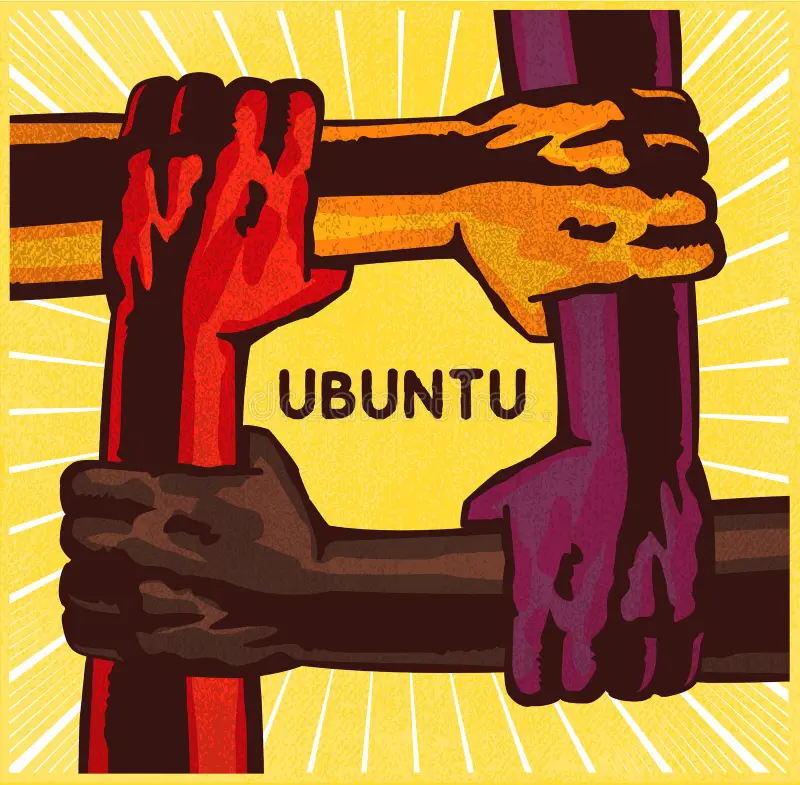
Reclaiming Ubuntu Philosophy as the Core of Our Shared Existence
Ubuntu philosophy is more than just words. It represents an entire African cosmology. This deep philosophical concept originates from the Bantu speaking peoples of Southern Africa.
Consequently, it offers a radical alternative to the Western world’s pervasive doctrine of individualism. Western thought often privileges the atomized self and the pursuit of personal liberty above all else.
However, the Ubuntu worldview places the collective at the center of existence. Specifically, it dictates that human identity derives meaning only through relationship with others.
This powerful ethic profoundly shaped precolonial justice systems, underpinned the post apartheid reconciliation process, and currently informs modern African business leadership.
Essentially, Ubuntu provides an African answer to the fundamental question of human being.
Consequently, understanding Ubuntu unlocks a richer comprehension of African civilization and its historical resilience against colonial forces.
This guide exhaustively details the roots, principles, political applications, and modern relevance of this powerful African worldview.

The Core Ontology: I Am Because We Are
The core principle of Ubuntu translates into the resonant phrase, “Umuntu ngumuntu ngabantu.” This statement means, “A person is a person through other persons.”
It serves as the foundational maxim of the entire philosophy. Consequently, this concept defines human identity not by individual attributes but by relationality.
Specifically, one cannot exist as a complete, moral, or fulfilled human being in isolation. Crucially, your humanity is inextricably linked to the humanity of every person around you.
Ubuntu as an African Worldview
Ubuntu constitutes a complete African worldview, an ontological and ethical system. Ontology asks what it means to be; Ubuntu answers that to be is to be connected.
Therefore, the goal of human life is not self maximization but communal harmony. Additionally, it rejects the Cartesian declaration, “I think, therefore I am.”
Ubuntu substitutes this individualistic focus with a collective affirmation: “We are, therefore I am.”
This worldview fundamentally shifts the focus of moral action. Specifically, a good action is one that builds up the community, promoting cohesion, cooperation, and mutual support.
Conversely, a bad action is one that tears the social fabric. Furthermore, traditional African thought views a person as an integral part of an extended community, which includes ancestors, the living, and those yet to be born.
This expansive sense of self illustrates the truly communal nature of existence.
Moral Attributes of a Person of Ubuntu
A person exhibiting Ubuntu embodies a specific set of virtues. These are not merely suggestions; they are requirements for full personhood.
Therefore, cultivating these traits moves one from merely *being* a human to *becoming* truly human. Specifically, a person of Ubuntu displays the following attributes:
- **Compassion:** A deep capacity to feel the suffering of others and act to alleviate it.
- **Generosity:** The readiness to share resources without expectation of immediate return, ensuring no member of the community suffers need.
- **Hospitality:** The welcoming and generous treatment of strangers, understanding that their well being reflects on the entire community.
- **Respect:** Showing deference to elders and leaders, recognizing the wisdom and experience they possess.
- **Solidarity:** The profound commitment to stand with and for other members of the community in times of crisis.
Crucially, one achieves these virtues only through practice within the community. Consequently, morality becomes a public performance and a shared responsibility.

Communal Existence: Historical Context and Precolonial Systems
Colonial powers systematically misunderstood and suppressed Ubuntu. They sought to impose individualistic property rights, retributive justice, and hierarchical governance structures.
Essentially, they ignored the sophisticated indigenous systems that prioritized consensus and collective welfare. However, Ubuntu served as the unwritten constitution for many precolonial African societies.
Specifically, it provided the blueprint for their political, legal, and economic structures.
The Kgotla: Justice Through Restoration
The traditional justice system of the Tswana and other Bantu peoples, known as the *Kgotla*, exemplifies Ubuntu in practice. The *Kgotla* was not a court in the Western sense, but a public forum.
Therefore, the entire community participated in resolving disputes. This system did not aim to punish the offender or extract retribution.
Conversely, its core goal was always restoration and reconciliation. Additionally, the process focused on repairing the harm done to the victim, the offender, and the community relationship itself.
The chief or headman presided over the *Kgotla*. However, everyone present contributed to the dialogue. Specifically, the process allowed the offender to publicly confront their actions and understand the resulting damage to the community’s fabric.
Consequently, punishment, when required, aimed at rehabilitation and the reintegration of the individual. The community actively affirmed the personhood of the wrongdoer, even while rejecting the wrong action.
This practice stands in stark contrast to Western retributive justice, which seeks isolation and punitive measures.
Economic and Social Communalism
Traditional African economies also operated on Ubuntu principles. Crucially, private ownership was often subordinate to collective access and shared resources.
Therefore, systems for land use, agricultural labor, and hunting ensured the sustainability and survival of the group. Consequently, concepts like absolute private property and unchecked self interest held no moral authority.
Additionally, the responsibility for raising children, caring for the sick, and supporting the elderly rested not on the immediate family alone but on the entire clan. This shared existence guaranteed a safety net for all members.
Specifically, this arrangement made destitution impossible unless the entire community faced a collective disaster.
Ubuntu in the Post Apartheid Era: Political and Legal Application
The reemergence of Ubuntu during the transition to democracy in South Africa was not accidental. Leaders like Nelson Mandela and Archbishop Desmond Tutu consciously invoked this indigenous ethic.
They recognized its power to heal the deep wounds of apartheid. Essentially, Ubuntu provided the philosophical foundation necessary for building a unified, non racial state.
The Truth and Reconciliation Commission (TRC)
The Truth and Reconciliation Commission served as the most famous application of Ubuntu in the modern world.
The TRC rejected the path of retributive war crimes tribunals.
Instead, it adopted a restorative justice model inspired directly by the Ubuntu philosophy. Specifically, victims and perpetrators faced one another in a public forum.
Consequently, perpetrators received amnesty in exchange for full public confession of their politically motivated crimes.
This process prioritized the acknowledgment of truth over the demand for punishment.
Furthermore, the TRC sought to restore the humanity of both the victim and the offender by bringing the hidden truth into the light.
Crucially, the process aimed for social healing, understanding that justice means restoring broken relationships.
Ubuntu and Constitutional Jurisprudence
While the final South African Constitution of 1996 does not explicitly mention Ubuntu, the Constitutional Court has frequently woven the concept into its jurisprudence.
This incorporation represents a massive victory for indigenous African thought. Specifically, judges employ Ubuntu as a guiding light when interpreting rights, human dignity, and customary law.
The court has recognized Ubuntu as an underlying value, an essential pillar of the new democratic order. Consequently, the legal system now promotes human solidarity, interdependence, and collective responsibility.
This development elevates a traditional African worldview to the level of supreme legal authority, challenging centuries of Western legal dominance.
This is known as *Ubuntu jurisprudence* and it has profoundly impacted legal decisions on property, dignity, and criminal sentencing.

A Practitioner’s Insight: Modern Relevance and Challenges
Ubuntu is not merely a historical or political relic; it remains a dynamic force shaping modern African life.
However, its principles face severe challenges in the context of global capitalism, rapid urbanization, and persistent socioeconomic inequality.
Ubuntu in Ethical Leadership and Corporate Governance
The philosophy offers a robust framework for ethical leadership and corporate governance in the twenty first century. Western corporate models often prioritize shareholder profit above all other concerns.
Conversely, the Ubuntu leadership model demands a broader, stakeholder centric approach.
Specifically, an Ubuntu leader recognizes that their organization exists as a part of the greater community.
Therefore, business decisions must prioritize the well being of employees, customers, suppliers, and the surrounding natural environment.
Consequently, corporate social responsibility becomes an inherent part of the business ethos, not an optional add on. Companies committed to this model practice:
- **Shared Prosperity:** Fair distribution of wealth and opportunities among all contributors.
- **Participatory Decision Making:** Involving employees in choices that affect their lives and the company’s direction.
- **Ethical Interconnectedness:** Rejecting corruption and nepotism, recognizing such actions damage the entire social ecosystem.
This approach moves leadership away from hierarchical power dynamics toward shared stewardship.
Challenges in a Globalized World
Ubuntu faces significant pressure from global trends. Rapid urbanization fragments traditional communal structures, fostering anonymity and increasing individualism.
Consequently, the social safety net of shared responsibility begins to fray. Additionally, the rise of a consumer driven culture and neoliberal economic policies promotes a mindset of self reliance that directly contradicts Ubuntu’s core tenets.
Specifically, intense competition for scarce resources in a highly unequal economic landscape often breeds xenophobia and conflict.
This presents a massive challenge to the Ubuntu principle of universal hospitality and interconnectedness. However, academics and social activists actively promote Ubuntu as an antidote to these forces.
Crucially, they propose its values as a necessary ethical framework for sustainable and equitable development across the continent.
The Enduring Power of the African Ethic
Ubuntu philosophy presents a profound and essential counter narrative to the dominant Western worldviews. It offers a sophisticated ethical system centered on communal solidarity, shared identity, and relational justice.
Specifically, the maxim “A person is a person through other persons” provides a moral compass for politics, law, and economic life.
Consequently, its legacy endures through the healing work of the TRC and the developing jurisprudence of the South African Constitutional Court. Furthermore, it continues to inspire a new generation of African leaders.
Essentially, Ubuntu proves that African philosophy stands as a major contribution to global thought. It demands recognition not as a cultural curiosity but as a viable, humane foundation for organizing human society in the modern world.