
Learn why pre-colonial history matters today than before. This article will help explain how to reclaim our narrative
The history of the African continent often begins with the tragedy of the slave trade or the subsequent violence of colonial partition.
Consequently, this framing effectively erases millennia of complex political, social, and intellectual life. This approach treats Africa as a passive entity, one merely reacting to external forces.
Critically, we must reject this simplistic and limiting narrative.
Reclaiming precolonial history is not an academic exercise alone. Specifically, it forms a crucial act of cultural and intellectual decolonization.
Additionally, this reclamation provides essential blueprints for modern governance, communal ethics, and sustainable living.
We must actively study the African past to properly inform the African present and future. Essentially, understanding our authentic narrative is foundational to asserting our sovereign agency in the global arena.
The African Worldview: Beyond Individualism
Precolonial African societies anchored their existence in a deeply communal worldview.
This stands in stark contrast to the fierce individualism later promoted by Western liberal philosophy.
Consequently, this core philosophical distinction shapes every aspect of social organization, political life, and ethical practice.
The Philosophy of Communal Existence
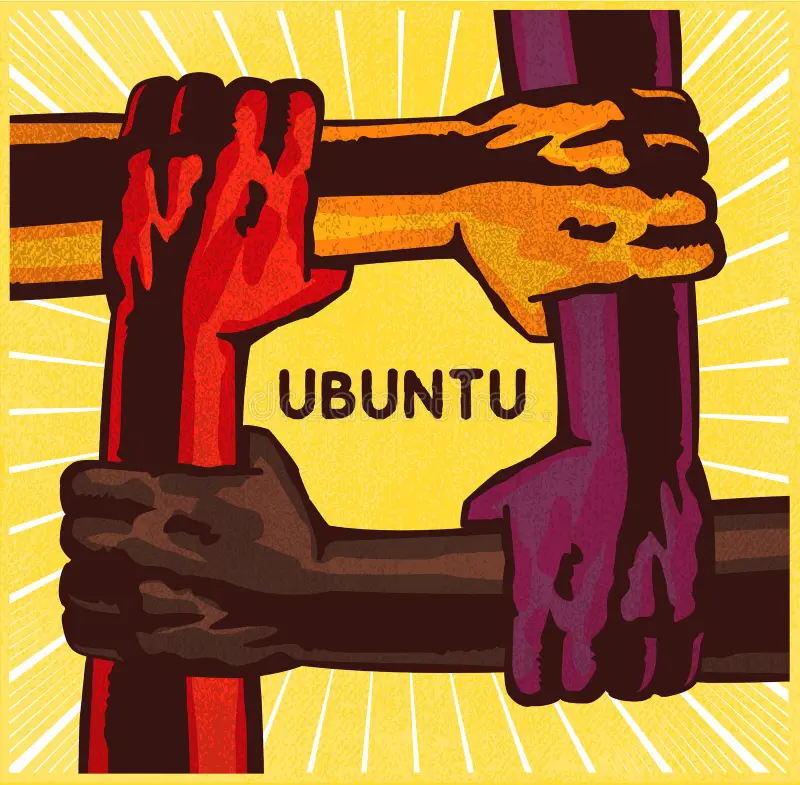
The concept of Ubuntu, primarily from the Southern African Bantu languages, captures this worldview best. The maxim states, “A person is a person through other people.”
This simple yet powerful statement expresses a complex ontology. Essentially, identity is relational, not isolated. An individual’s worth and personhood derive directly from their participation in the community. Furthermore, individual flourishing is intrinsically tied to the well being of the collective.
Traditional African thought thus prioritizes duties to the group over personal rights, creating a robust framework for social cohesion.
Crucially, society functioned as an interconnected web, not a collection of competing solo actors.
Harmony Between Worlds
The African worldview also incorporates a profound recognition of the unity between the living, the ancestors, and the unborn.
Specifically, life is viewed as a continuous whole, where the spiritual and physical realms constantly interact. Ancestors remain active members of the community, offering guidance and moral authority. Therefore, societal decisions carried moral weight, impacting past, present, and future generations simultaneously.
This sense of historical responsibility provided a powerful check on tyrannical power and encouraged long term planning.
Consequently, this holistic framework promoted accountability and mutual respect across the entire community.

Historical Context: Blueprints of Greatness
European colonizers often perpetuated the myth of precolonial Africa as a land without civilization, history, or sophisticated governance.
However, the archaeological and written records clearly document powerful empires, advanced political systems, and stunning technological achievements.
A thorough examination of these histories shatters the colonial myth of a “dark continent.”
The Intellectual Power of Timbuktu
The Mali Empire (c. 1230–1600) stands as a testament to the continent’s intellectual and economic prowess. Specifically, Timbuktu, a major city within the empire, became a globally renowned center of Islamic scholarship and trade.
Its reputation extended across North Africa, the Middle East, and Europe. This city housed numerous private and public libraries, storing hundreds of thousands of manuscripts. These texts covered an astonishing array of subjects, including astronomy, mathematics, law, medicine, and Islamic theology.
Consequently, Timbuktu was not just a trading hub for gold and salt; it was a leading university town, a beacon of learning. Scholarly networks thrived, demonstrating a commitment to education and intellectual rigor.
Essentially, the intellectual accomplishments of Timbuktu rivaled any contemporary European center.
The Architecture of Great Zimbabwe
The monumental ruins of Great Zimbabwe in Southern Africa offer undeniable proof of advanced indigenous engineering and state organization.
Dating from the 11th to 15th centuries, the city complex features massive stone enclosures, towers, and walls. Significantly, the builders constructed these structures using highly sophisticated dry stone masonry.
This technique involves perfectly fitting stones together without mortar. No outside influence or assistance was required for this feat. The immense size and complexity of the architecture indicate a well organized state with the capacity to mobilize significant labor and resources.
Furthermore, Great Zimbabwe served as the capital of a wealthy, vast trading empire, connecting the goldfields of the interior with coastal ports.
This site stands as a powerful symbol of an indigenous African urban civilization. It directly challenges the historical falsehoods of inherent African primitivism.
Political Centralization: The Kingdom of Kongo
The Kingdom of Kongo, established by the 14th century, represented a highly centralized and bureaucratically organized state in Central Africa.
A king, the Manikongo, ruled with authority, but his power was not absolute. Importantly, he governed through a complex system of appointed provincial governors, local chiefs, and a council of advisors.
This established a functional bureaucracy capable of managing trade, taxation, and a large territory. Consequently, the kingdom possessed a robust, hierarchical administration before any permanent European presence.
This historical example confirms that African polities successfully developed large scale governance models without external intervention.
Their systems provided a stable political environment for centuries.
Pluralistic Governance: Examples of Indigenous Democracy
Many precolonial societies practiced forms of collective decision making that can inform modern democratic institutions.
For example, some societies utilized assemblies of elders, councils of chiefs, or even women’s councils, ensuring broad representation.
The Tswana people of Southern Africa developed a tradition of the kgotla, a public gathering space where community issues were debated and resolved transparently. This provided a foundational mechanism for public participation and pluralism.
Additionally, in other societies, political power was intentionally decentralized to prevent tyranny. These historical examples demonstrate a clear tradition of sophisticated, participatory governance.
They show that democracy, in its truest sense, is not a foreign concept to the African continent.
Precolonial Philosophy: Matters Today
The relevance of this history extends far beyond correcting historical inaccuracies. The principles embedded in the precolonial African worldview offer compelling solutions to many of the global challenges we face today, from social fragmentation to environmental crisis.
Ubuntu in Modern Law and Governance
The communal philosophy of Ubuntu has found practical application in contemporary South African jurisprudence.
Specifically, the post-apartheid Constitutional Court has explicitly integrated Ubuntu as an ethical and legal value. Consequently, this philosophy influences judicial interpretation, promoting reconciliation, human dignity, and restorative justice over purely punitive measures.
The courts view justice not just as a matter of individual rights but as a process that aims to heal social relationships. Furthermore, in governance, an Ubuntu framework encourages leaders to prioritize the needs of the most vulnerable and to seek consensus over division.
This ancient wisdom provides a moral anchor for building equitable, inclusive modern societies.
Restorative Justice and Conflict Resolution
Precolonial African societies often employed sophisticated conflict resolution methods centered on restoration and reconciliation.
These processes focused on repairing the harm done to the victim and the community, not merely punishing the offender.
Elders played a crucial role in mediating disputes, employing dialogue and consensus building to achieve a lasting peace.
Traditional courts and forums sought truth and community reintegration for all parties. Conversely, the Western legal model often emphasizes adversarial combat and individual retribution.
Consequently, modern society can learn valuable lessons from these indigenous practices. Integrating restorative justice principles can improve contemporary criminal justice systems, fostering genuine healing and reducing recidivism.
Ecological Wisdom and Sustainability
The traditional African worldview maintains a deep spiritual and reciprocal relationship with the natural world. Essentially, people viewed land and water not as resources for extraction but as communal entities, often tied to the ancestors.
Indigenous knowledge systems codified practices that ensured the sustainability of the ecosystem. For instance, specific forests or rivers were often declared sacred, automatically protecting them from exploitation.
This concept of environmental stewardship, rooted in reverence and interdependence, contrasts sharply with the purely utilitarian view of nature dominating industrial society.
Crucially, precolonial ecological philosophies offer a strong ethical foundation for addressing the modern climate crisis.
The principles of respecting and living in harmony with the environment are critical for global sustainability.
Decolonizing Knowledge and Asserting Sovereignty
The process of reclaiming the precolonial narrative directly supports the intellectual and political sovereignty of the continent. Decolonization must happen in the mind as well as in the political structures.
The Mental Shift
Colonial education systematically taught generations that Africa had no history worth studying. This narrative resulted in a profound psychological injury.
Reclaiming a narrative of achievement, complexity, and power counters this mental subjugation. It instills pride, self confidence, and a sense of historical continuity.
Consequently, students learn that their ancestors were builders of empires, innovators in law, and custodians of immense libraries.
This knowledge empowers the youth to imagine a future rooted in their own historical strengths.
Informing Modern Political Structures
Postcolonial African nations often adopted political systems inherited directly from their former colonizers. Consequently, these foreign models frequently failed to integrate with or respect indigenous social structures, leading to instability.
Studying precolonial systems offers a rich source of home grown political theory. For example, the balanced power structures of the Kongo Kingdom or the participatory kgotla system provide models that resonate with African cultural values.
African governance can achieve greater legitimacy and efficacy by drawing on these authentic, indigenous templates. This self reflective study allows nations to move beyond simply mimicking Western democracy.
Global Contribution and Ethical Leadership
Precolonial African thought offers valuable contributions to global ethical and political discourse. Concepts like Ubuntu can provide a necessary corrective to the excesses of global individualism and cutthroat capitalism.
Furthermore, African philosophies of harmony between nature and humanity present a compelling alternative to the destructive model of unlimited resource consumption.
By asserting its own historical achievements and philosophical depth, Africa claims its rightful place as an equal and contributing partner in shaping the world’s ethical future. The world needs this wisdom.
Conclusion: The Path Forward
Reclaiming the precolonial African narrative is not a nostalgic retreat into the past.
Instead, it represents a strategic, future oriented endeavor.
It is an act of intellectual sovereignty, a necessary step toward self determination. Understanding the complexity of empires like Mali, the advanced masonry of Great Zimbabwe, and the ethical weight of philosophies like Ubuntu equips us powerfully.
This knowledge provides the moral, intellectual, and political resources needed to tackle contemporary challenges. Specifically, this deep historical awareness offers genuine pathways for building more equitable, sustainable, and truly democratic societies.
We must champion this history, recognizing it as the foundation upon which a stronger, self confident African future will rise.