
Learn and get inspired by the buffalo soldiers whose history is barely told until now.
The Buffalo Soldiers represent an extraordinary chapter in American military history. They were not merely soldiers fighting on the frontier.
Consequently, they became symbols of resilience, honor, and the determined pursuit of citizenship. These regiments emerged from the ashes of the Civil War.
Crucially, they forged a new identity in a hostile post Civil War landscape.
This article explores their deep communal existence, their powerful African worldview, and their undeniable impact on the American West.
The Genesis of a Legendary Force
The United States Congress established six all Black regiments in 1866. This action followed the immense service of African American troops during the Civil War.
Specifically, these regiments included the Ninth and Tenth Cavalry and the Thirty eighth, Thirty ninth, Fortieth, and Forty first Infantry.
Later, Congress consolidated the infantry units into the Twenty fourth and Twenty fifth Infantry Regiments.
These four units formed the core of the legendary Buffalo Soldiers.
A Name Born of Respect
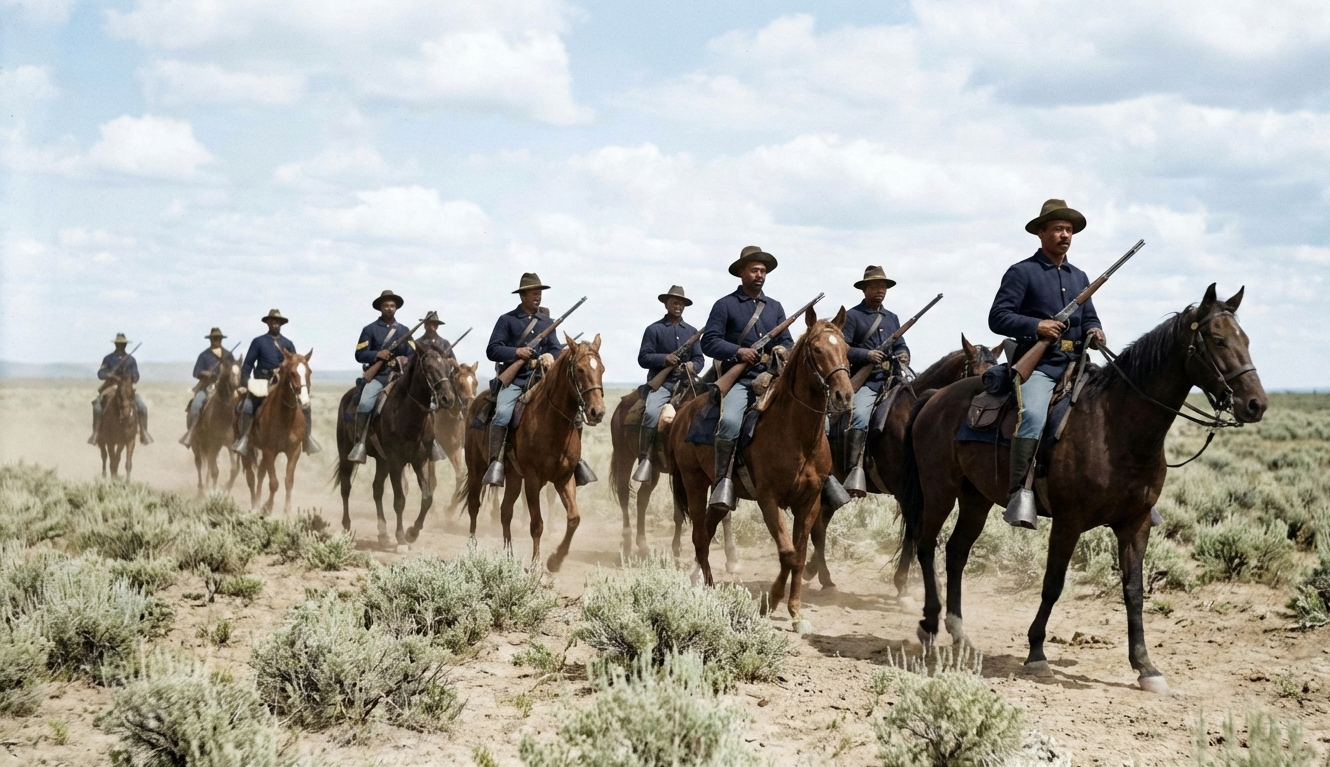
The moniker “Buffalo Soldier” did not originate in a government office. Instead, Native American tribes, including the Cheyenne and Apache, gave the Black cavalrymen this name.
Legend holds that the soldiers’ fierce fighting spirit and their dark, curly hair resembled the coat of the revered bison. Consequently, the soldiers proudly adopted the name.
They considered it a badge of honor and respect from a formidable opponent. This adoption signified a unique cultural intersection on the Western frontier.
The Post Civil War Mandate
The nation required a new, professional army to rebuild after the war. The Buffalo Soldiers served this need immediately. Their primary duty involved fighting in the Western Indian Wars from 1867 to 1896.
They engaged tribes like the Apache, Kiowa, Cheyenne, and Comanche. Additionally, they performed essential non combat roles across the vast frontier.
Ultimately, they became the first Black professional soldiers in a peacetime American army.

The African Worldview: Honor, Duty, and Uplift
The Buffalo Soldiers’ service was fundamentally rooted in a powerful African American worldview. This perspective was shaped by their recent history of slavery and the ongoing struggle for true freedom.
Specifically, the men viewed military service as a direct path to securing their rights as American citizens.
They saw their duty as a demonstration of Black worth and manhood.
Claiming Manhood and Citizenship
For African American men of the 19th century, serving in the US Army offered a unique opportunity. It allowed them to claim public honor and self respect.
Many believed their loyal, disciplined service would prove their fitness for full citizenship. Consequently, a deep sense of racial uplift permeated the regiments.
Samuel Harris, a future Medal of Honor recipient, exemplified this motivation. He and his peers believed completing their military commitment would finalize their journey to American belonging.
Resilience Against Racism
The Buffalo Soldiers faced virulent, systemic racism both within and outside the army. They received inferior supplies and pay compared to their white counterparts at times.
Moreover, they often endured segregated living conditions and outright hostility from local white populations. Despite these profound injustices, their commitment remained steadfast.
This persistence was a direct expression of their worldview. It emphasized dignity, self restraint, and fierce defense of honor. Crucially, soldiers would not hesitate to defend their lives and property when provoked.
The Spiritual and Educational Core
Regimental chaplains played a role far beyond simple religious instruction. These chaplains recognized the great educational disparity leftover from slavery.
Consequently, they became the teachers of the regiments. They taught soldiers how to read and write. This educational component fostered a culture of self improvement and intellectual growth within the ranks.
Therefore, the regiments functioned as military units and also as vital educational institutions. They cultivated an informed, professional class of Black American men on the frontier.

The Communal Existence: Forging a Family on the Frontier
The isolated nature of frontier duty, combined with racial exclusion, forced the Buffalo Soldiers to develop strong, self reliant communities.
These regiments were more than military formations. They became extended families.
The men depended on one another for survival, spiritual support, and cultural validation.
The Military as a Self Sustaining Ecosystem
The forts where Buffalo Soldiers were stationed often existed in remote, desolate areas. White civilian communities nearby rarely welcomed them.
Consequently, the Black troops created their own vibrant social ecosystems. Soldiers’ families, including wives and children, often lived near the fort.
This arrangement further cemented the communal bond. Moreover, the black community actively supported the success of the regiments.
This support formed a crucial social safety net on a harsh frontier.
Discipline and Esprit de Corps
The regiments quickly earned a reputation for exceptional discipline and professionalism. Desertion rates among the Buffalo Soldiers were significantly lower than those of their white counterparts.
Specifically, many of these men had nowhere else to go. Their entire future depended on the integrity and success of the regiment.
This necessity generated an unparalleled esprit de corps. They developed an internal pride in their units. Furthermore, they knew they represented the entire Black race to a skeptical nation.
This knowledge drove their high performance standards.
The Civilian Soldier Role
Their duties extended far beyond traditional combat. The Buffalo Soldiers were instrumental in the development of the American West.
They built and repaired telegraph lines and military roads. Additionally, they escorted settlers, mail coaches, and railroad construction crews.
Essentially, they acted as law enforcement and infrastructure builders across the vast territories. These non combat roles highlight their deep contribution to civilian life. Their communal discipline benefited not only the army but the entire developing Western infrastructure.
The Frontier and Overseas: Defining Campaigns
The Buffalo Soldiers were central to two of the US Army’s most challenging historical periods. They campaigned across the unforgiving plains. Then they fought for the United States overseas in a controversial foreign war.
Their service demonstrated consistent valor and skill under fire.
Battles of the Indian Wars
The primary mandate of the regiments involved protecting settlers and controlling Native American tribes. They participated in numerous engagements, including the campaigns against Victorio and Geronimo.
Numerous Buffalo Soldiers earned the Medal of Honor for valor during these decades of conflict. Their track record established them as one of the most effective fighting forces in the Western Department.
Ultimately, they fought for a country that denied them basic rights. They did so with immense skill and unwavering professionalism.
Pioneering Park Rangers
Interestingly, some Buffalo Soldiers served an unexpected peacetime role. They functioned as some of the first protectors of America’s National Parks.
Specifically, the Tenth Cavalry served in Yosemite and Sequoia National Parks. Their duties included fighting wildfires and curbing poaching. Additionally, they ended the illegal grazing of livestock on federal lands.
This unique service positioned them as trailblazers in conservation history.
They protected America’s natural heritage while simultaneously fighting for their own human rights.
The Spanish American War
The regiments gained national attention for their service in Cuba during the Spanish American War in 1898. They played a critical role in major engagements.
These included Las Guasimas, Tayabacoa, El Caney, and the famous charge up San Juan Heights. They fought alongside Theodore Roosevelt’s Rough Riders at San Juan Hill.
Consequently, their bravery helped secure decisive American victories. Furthermore, their performance shattered many prevailing racial stereotypes about Black soldiers.

A Legacy of Unflinching Professionalism
The history of the Buffalo Soldiers did not end with the Spanish American War. Their legacy continued throughout the 20th century.
Though the units were reorganized before World War II, the tradition of African American excellence in the military lived on.
They established an enduring groundwork for the advancement of all Black soldiers.
The Path to Integration
Despite their distinguished service overseas and on the frontier, the Buffalo Soldiers still faced segregation. The military remained strictly segregated through World War I and World War II.
However, their cumulative record of valor and competence became irrefutable. This sustained excellence applied immense pressure for change.
Crucially, their legacy helped inform the decisions of later leaders. President Harry S. Truman eventually issued an executive order to end racial segregation in the military.
This landmark decision occurred in 1948. Ultimately, the Buffalo Soldiers’ half century of service directly paved the way for a more integrated armed forces.
The Enduring Symbolic Power
- The Buffalo Soldiers remain a potent symbol of patriotism and persistence.
- They exemplified the idea of fighting for a country that does not yet fully recognize your humanity.
- They demonstrated the profound commitment of African Americans to the ideals of the nation.
- Their story inspires generations to recognize the power of communal strength and unwavering duty.
- Their sacrifices ensured that future generations of African Americans could serve without the shackles of segregation.
They truly were forgotten warriors who fundamentally changed the course of history.